Retirement Planning
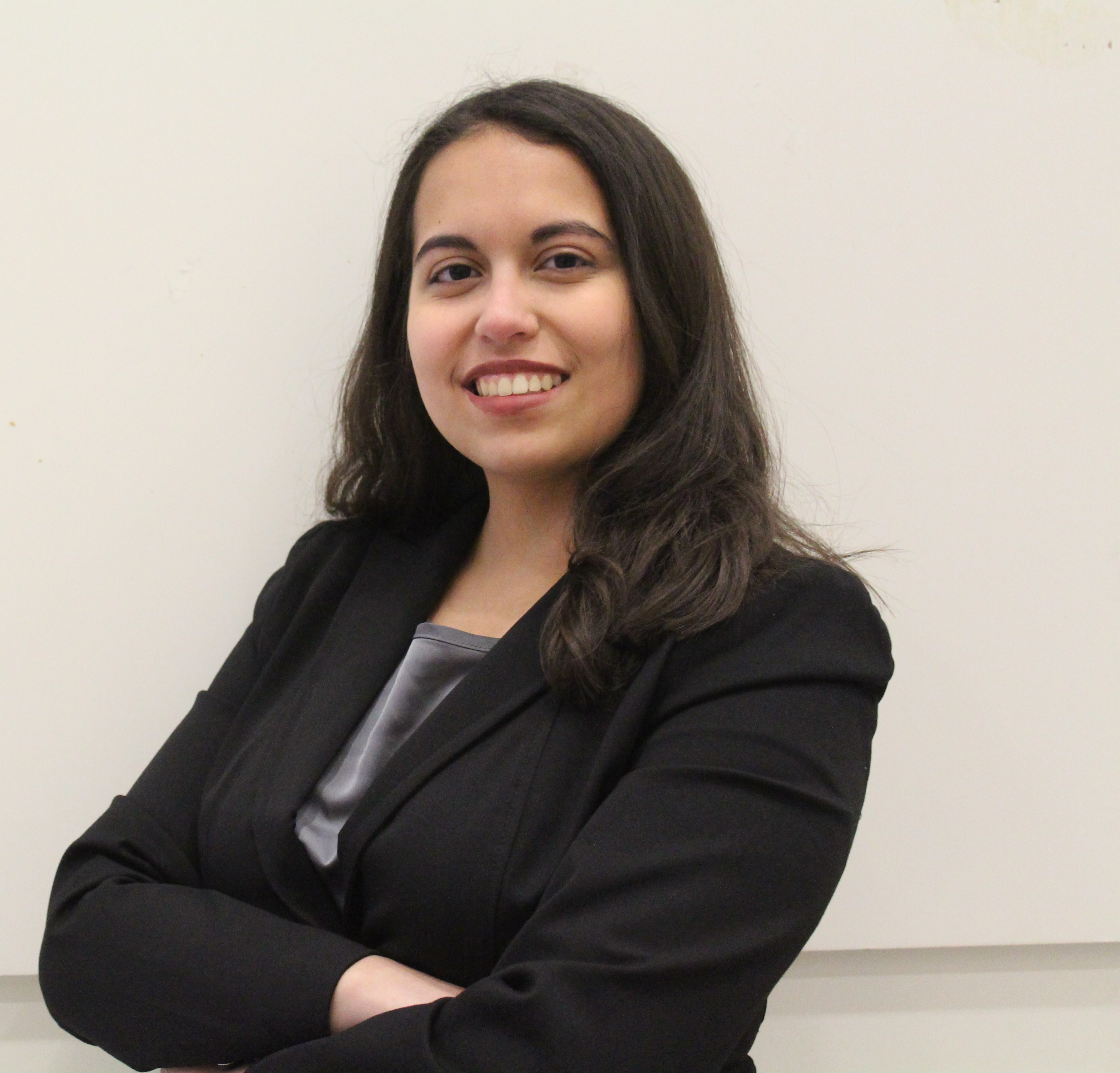
Nadine Burgos
AFC® Candidate, CPA Candidate, and CFP™ Candidate
How Women Can Master Retirement Planning at Every Life Stage

Women face a unique mix of financial dynamics that shape retirement planning. Here's what to understand.
Retirement planning often gets treated like a math problem. Save enough, invest well, retire comfortably. But for many women, it doesn't work that cleanly. Life gets in the way, in both expected and unexpected ways. Careers pause. Caregiving steps in. Paychecks shift. Priorities change. And somewhere in the middle of all of it, retirement planning gets pushed to the back burner.
What many people notice is that women don't just face a retirement savings gap. There can also be a confidence gap, a timing gap, and an information gap that shapes how financial decisions unfold across a lifetime.
The good news is that none of this is set in stone. And none of it has to be figured out all at once. A lot of people find that simply starting to look at where things stand brings more clarity than trying to solve everything at once.
Why retirement planning looks different for women
There are a few key financial dynamics that tend to shape women’s retirement outcomes.
One of the most documented is the wage gap. In 2023, women in the U.S. earned about 84 cents for every dollar earned by men and it decreased to 82 cents in 2025, according to the Bureau of Labor Statistics. That difference doesn't just show up in paychecks; it compounds. Lifetime savings, employer contributions, investment growth: all of it reflects those smaller inputs year after year.
Career interruptions are another common factor. Research from the U.S. Department of Labor highlights that women are more likely to step away from the workforce for caregiving responsibilities, whether for children, aging parents, or family needs. Even when these breaks are temporary, they can reduce total working years and long-term contribution growth.
Then there's longevity. Women live about five years longer than men on average in the U.S. That additional time means retirement savings for women has to be roughly 10-30% than a man, which most people do not initially plan for.
These factors do not operate in isolation. They interact over time, shaping a financial picture that can look very different from what traditional retirement assumptions assume.
The confidence gap and how it shows up
Beyond income and savings, there is another factor that quietly influences financial outcomes: confidence.
Many women describe moments of uncertainty around financial decisions, even when they are actively engaged in saving and planning.
Questions like:
Am I on track?
Is this enough?
What if I’m missing something?
This uncertainty can sometimes lead to hesitation or delay, not because of lack of awareness, but because the landscape feels complex. Research from Fidelity’s gender retirement studies shows that women are more likely than men to express concern about whether they are saving enough for retirement, even when their financial behaviors are similar
Confidence and clarity tend to reinforce each other. The more familiar the picture becomes, the easier it is to understand what matters most.
Social Security and how it fits into the picture
If you ask anyone, what do you need for retirement? Social security will be mentioned with confusion on how it works or concern over it lasting.
This isn’t shocking to hear since the Social Security Administration notes that for many retirees, Social Security accounts for roughly 30–50% of retirement income, depending on overall savings and earnings history. Therefore, Social Security is one of the largest parts of retirement planning and it is essential to understand so women can add this to their income after properly claiming it.
First, it is important to note that Full Retirement Age (FRA) at 67, which is generally when most will take their benefits. The earliest age one can claim benefits is 62, however this reduced benefits permanently. The latest age most will take is 70, as that age is the maximum delayed benefit an individual can earn. Waiting until 70, allows an increase in monthly benefits. It is up to the individual to decide when they will take it.
The biggest part of the benefit calculation will come from work history. Work history can be negatively impacted by years spent in career breaks whether from pregnancy, part-time employment to care for kids, or caregiving towards children or elderly parents. These are all common realities for women, who often fill these roles, to consider why they might have less benefits. The good news is that women may take have the opportunity to claim spousal (even if they divorced) or survivor benefits. Women should consider all these factors when claiming their social security to see what would give them the highest benefit.
What retirement planning really comes down to
At its core, retirement planning tends to revolve around a few simple questions:
What does someone want their future to look like?
What does their current financial situation look like?
How do those pieces shift over time?
The answers are never identical. Some people think about stability. Others think about flexibility, family support, travel, or lifestyle changes down the road.
There’s no single version of a retirement savings plan that applies to everyone. Instead, it becomes something that evolves as life does.
What if I’m just starting? Thinking across life stages
A common question is whether it ever feels too early, or too late, to start paying attention to any of this.
In reality, many people find that what changes most is not whether they engage with it, but what they are focusing on at the time.
In earlier years, attention often centers on building habits and getting familiar with the basics. Mid-career tends to bring more complexity: financial responsibilities expand, and the balancing act between present needs and long-term planning gets harder to ignore. Later on, the focus usually shifts toward understanding how all the different pieces connect.
Across every stage, what tends to matter most isn't when someone starts paying attention, but what they do with that attention once it's there.
The real message
Women are not a niche in retirement planning. They're central to it.
And while the financial dynamics are real, wage gaps, caregiving years, longevity, the confidence piece, they don't define the outcome on their own.
Financial journeys rarely follow a template. Some people become parents earlier or later. Some don't have children. Some move in and out of the workforce. Some prioritize career growth for long stretches, then pivot. Others are still figuring out what the path even looks like, and that's part of the process too.
Getting familiar with the landscape usually brings more clarity than trying to control every variable at once. Retirement planning isn't a moment. It's something that shifts and adjusts as life does, and for a lot of people, the most meaningful step is just beginning to see it through their own lens.
Not having everything figured out. Starting to understand what's there, and building from there.
Where a Fruition Mentor can help
For some people, it helps to talk through their situation in a way that feels simple and conversational, without pressure to make immediate decisions.
A Fruition Mentor is not there to prescribe decisions, but to help create clarity around what’s currently in place, what questions might still be open, and how different pieces of the financial picture connect.
People find that kind of support useful at a lot of different points:
Trying to get their arms around the full picture for the first time
Making sense of something unfamiliar, like Social Security timing or benefit types
Working through a life change that's shifted things: a job transition, a caregiving stretch, a divorce
The goal isn't to simplify decisions that aren't simple. It's to make the information easier to work with.
About the author
Nadine Burgos
AFC® Candidate, CPA Candidate, and CFP™ Candidate
Nadine Burgos is a first-generation Latina financial professional and entrepreneur pursuing her CFP, CPA, and AFC certifications. She helps women, Latinos, underserved communities, and clients of all backgrounds navigate financial planning, literacy, and tax preparation. With experience in auditing, accounting, banking, nonprofit teaching, and business operations, she blends education and practical strategies. She holds a BA in Economics with a Statistics minor and an MA in Accounting from Rutgers University and is an active member of FPA NexGen, NJCPA, ALPFA, and AFCPE.