Retirement Planning
Shakira Drones
Trauma of Money Method Certified Practitioner, AFC® Candidate
Late Start? How to Catch Up on Retirement Savings

Behind on retirement savings? Starting later doesn't mean you can't catch up. A look at contribution limits, overlooked assets, and the role time still plays.
You finally found the time to sit down, go through your retirement accounts, and run the numbers. The initial shock of seeing the gap between where you are and where you think you should be can be very overwhelming, and rightfully so. While the numbers might suggest you have a long, steep journey ahead of you, they don’t tell the complete story. It’s equally important to look at the life you’ve lived and the situations that may have shaped your financial decisions up to this point.
Oftentimes, people spend years juggling caregiving responsibilities, family priorities, and work-life imbalance. Some are also part of the sandwich generation, taking care of their children and aging parents at the same time. Others may have gone to college later in life, switched careers, relocated, or simply lacked the discretionary income for retirement savings.
Whatever your circumstances were, competing priorities may have influenced where you are today. Understanding your starting point can be a big help in deciding what you want to do moving forward. The good news is that you still have options, opportunities, and information from your life experiences that you can use to propel yourself forward.
It might not feel like it, but this is a great time to dream. People tend to look at retirement in numbers. Rarely do they sit down to think about what they want their retirement to look like day to day.
Before you catch up, get clear on what you want to catch up to
Before you spend any more time on the math, start with the picture. What do you want your retirement to look and feel like every day? Without one, working toward a long-term goal can feel like an uphill battle. The numbers matter, and so does the life you want to live once you get there.
Imagine a typical Sunday when you’re in retirement. What will your mornings look like? What time do you wake up? What do your surroundings look like? Are you alone or spending quality time with family? Are you living in the same house, state, or country? Are you traveling more often? If so, who’s traveling with you? Do you have a new hobby? Are you still working, or are you enjoying your newfound freedom?
Once you have a rough sketch (it doesn’t have to be fully clear), you can begin working backward toward your retirement goals. Your vision of retirement gives your financial plan a north star to work toward.
What do you already have that could work in your favor?
With that picture in mind, your accounts might look a little different. Instead of one big number, you can view them as different buckets. Each bucket can serve a different purpose on your journey toward catching up on retirement.
Bucket number 1: Tax-advantaged retirement accounts
Some retirement accounts can lower your taxes, which may allow you to keep more money in your wallet today and in retirement. For instance, traditional retirement accounts may reduce your tax bill today, while Roth IRAs can offer tax-free withdrawals in retirement.
Accounts such as 401(k)s, 403(b)s, 457(b)s, traditional IRAs, and Roth IRAs can offer tax advantages for you to consider. You may have an old retirement account from a previous employer that you forgot about. Does your current employer offer matching contributions? If so, that match is part of your retirement picture, too.
I know it can feel heavy to be behind on retirement savings. But you may have more opportunities to save than you think. In 2026, the employee contribution limit for 401(k)s, 403(b)s, and governmental 457(b)s is $24,500 for people under 50. Individuals 50 and older can generally contribute up to $32,500 to the same accounts. That extra $8,000 is called a catch-up contribution. People ages 60 to 63 may be able to contribute even more, up to $35,750, if their plan allows it.
Traditional and Roth IRA contribution limits are capped at $7,500 if you’re under 50 and $8,600 if you’re 50 and older. That cap is a combined total across all of your IRAs, not a separate limit for each one. Some retirement accounts also have income limits. For example, the ability to contribute to a Roth IRA phases out between $153,000 and $168,000 for single filers and heads of household in 2026, and between $242,000 and $252,000 for married couples filing jointly.
Bucket number 2: Other assets you may have accumulated over the years
Retirement accounts may not be the only resources you can use to help you catch up. If you’re a homeowner, you may have built up equity in your home over time and may be able to open a HELOC. If you own a permanent life insurance policy, you can check to see how much cash has accumulated in your policy. Keep in mind, I’m not suggesting tapping into these assets. The idea is simply to review them and see how they might fit into your overall retirement savings goals. Both also come with trade-offs. A HELOC uses your home as collateral, and borrowing against or withdrawing cash value can shrink your policy’s death benefit.
After looking at your accounts and running the numbers again to see where you stand, you may find there’s another resource to help you catch up: time.
Bucket number 3: There’s still time for your money to grow
If you still have discretionary income after contributing to your retirement accounts, a taxable brokerage account is another place your money can grow. Unlike workplace retirement accounts and IRAs, a taxable brokerage account doesn’t have a limit on how much you can contribute annually. Time is what makes that room valuable. Money invested in your 30s or 40s can still have decades to grow, because returns can build on themselves through compounding. Typically, your budget, goals, timeline, and risk tolerance guide whether and how much you decide to invest. And like any investment, it comes with risk.
Bonus bucket number 4: Building your future means protecting it, too
Retirement planning takes both offense and defense. Consider controlling what you can and managing what you can’t. For example, you’re playing offense when you make contributions to your accounts, take advantage of your employer match, and explore ways to grow your money. You’re playing defense when you put strategies in place to protect your family, your income, and the financial foundation you’re building.
Two fundamental tools to have on your radar are an emergency fund and disability insurance. An emergency fund can help you manage unexpected bills. It can also keep you from dipping into retirement money to pay for emergencies. Disability insurance, meanwhile, may help replace some of your income if you become unable to work due to an illness or injury.
Growing your savings is one half of the equation. Protecting what you’re building is the other.
You don’t have to figure it out alone
You’re not alone. I’m also a late starter, and I’ve been able to make meaningful progress toward my retirement goals. One bucket I’ve maximized is my workplace retirement accounts. My 403(b) ($24,500) and governmental 457(b) ($24,500) allow me to contribute a combined $49,000 this year. Employees who have access to both accounts can max out both or simply contribute what works best for their budget. That’s because a 457(b) has its own separate limit. A 401(k) and a 403(b) work differently. They share one limit, so having both doesn’t double your room.
Feeling behind on retirement can be overwhelming, but it doesn’t mean you’re stuck. Starting later doesn’t mean you can’t catch up. For a lot of people, the first step is small: picking one of these buckets and taking a closer look at what’s already in it. A Fruition Mentor can help you think through which one to start with.
About the author
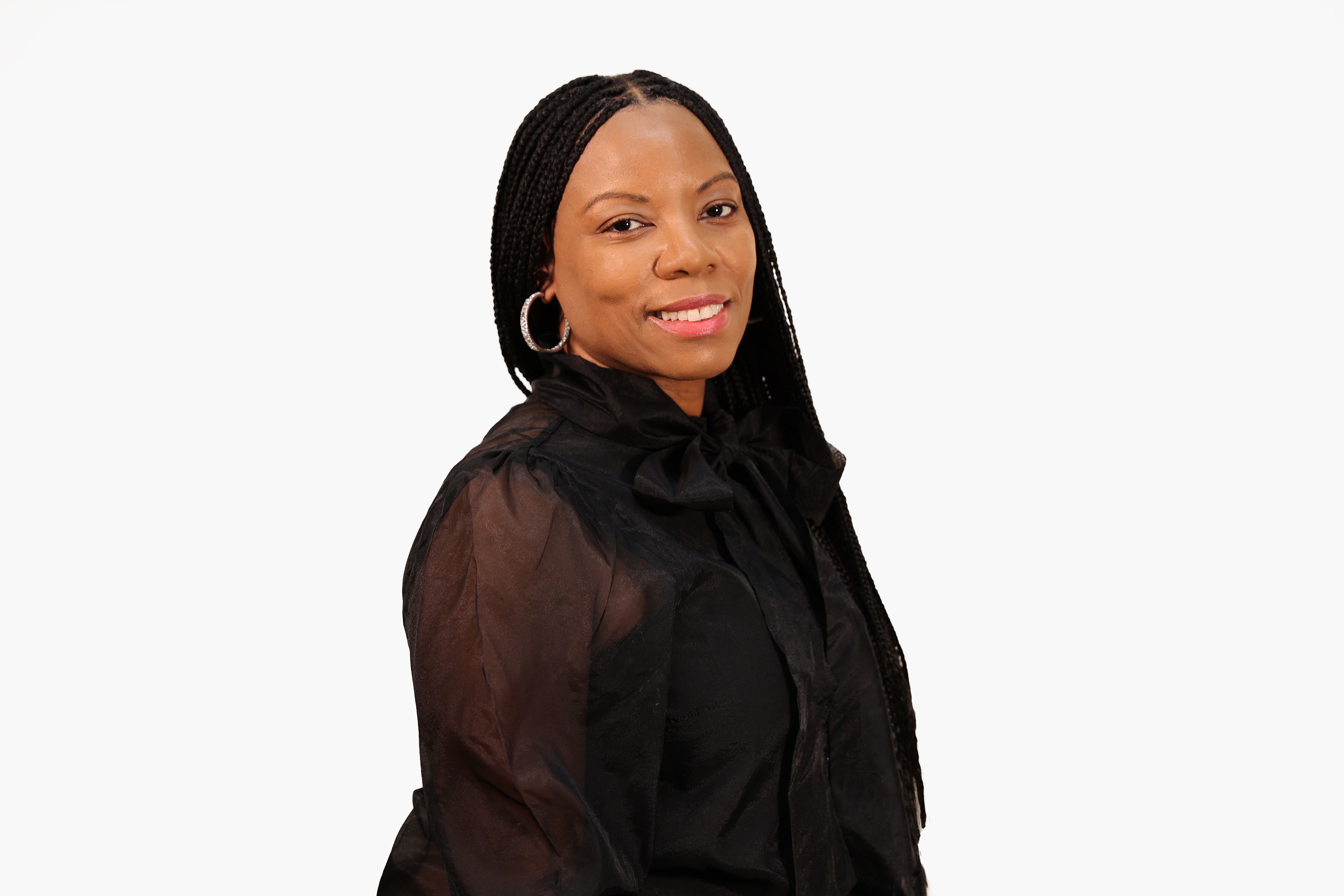
Shakira Drones
Trauma of Money Method Certified Practitioner, AFC® Candidate
Shakira Drones is a trauma-informed money coach, AFC candidate, registered nurse, speaker, and author from Newark, NJ. She paid off $111,722.47 of debt during a global pandemic and did the healing work required to sustain long-term change. She helps women get out of debt and out of financial survival mode through financial literacy, personal development, and accountability within the community. Her work guides women to release money shame, disrupt generational patterns, and rebuild trust with money.